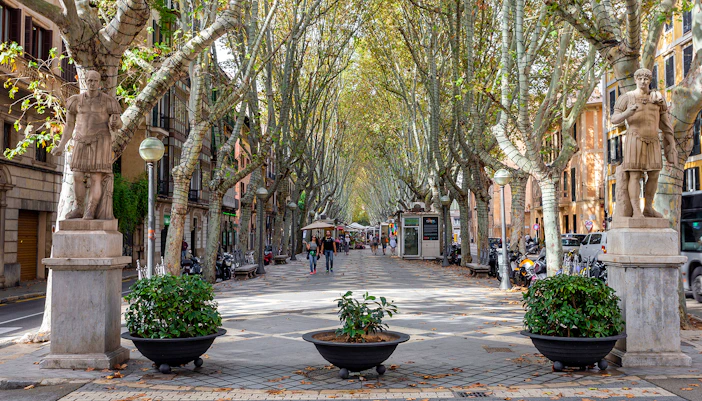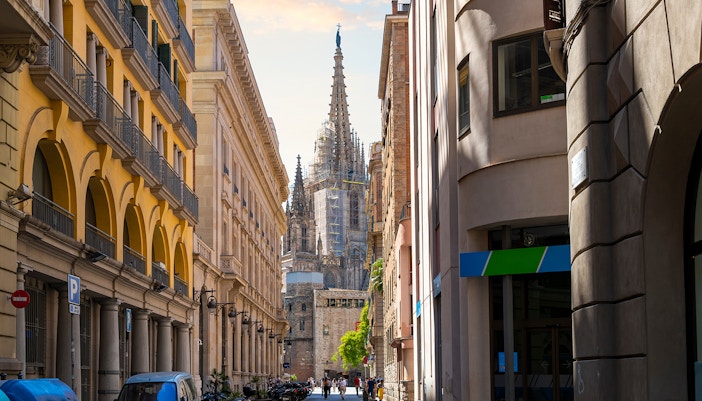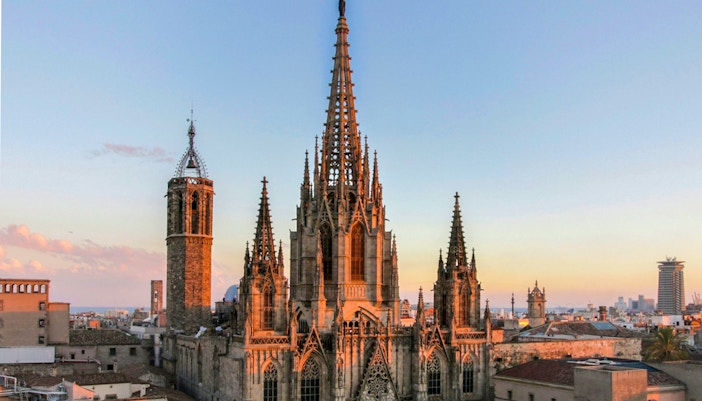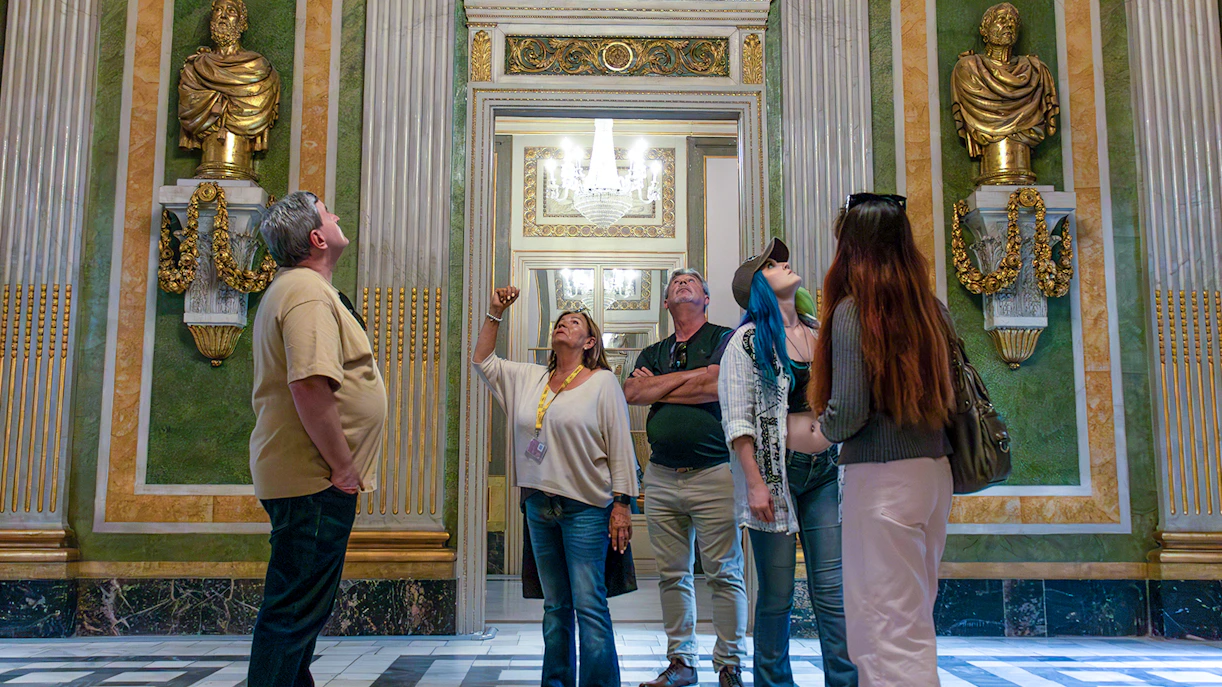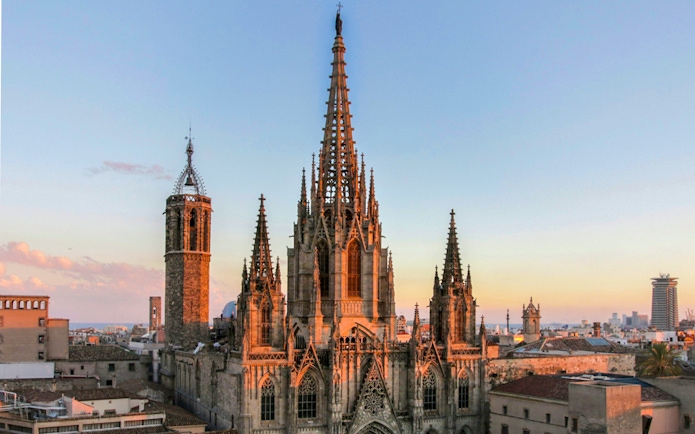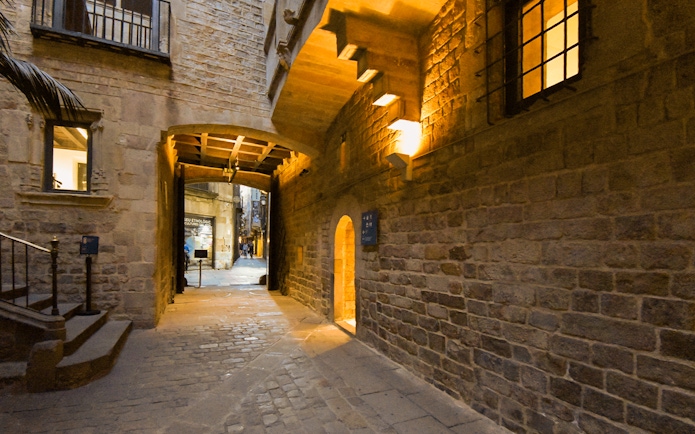

- Description: Walk the lane between the Cathedral and Plaça Sant Jaume to see the carved neo-Gothic bridge, stone facades, and one of the quarter’s best street perspectives.
- Best for: Photographers, walkers, short visits.
- Duration: 20–30 minutes.
- Combine this with:
Plaça Sant Jaume — 2 minutes on foot. It keeps the route tight and adds the quarter’s main civic square right after the bridge.
Barcelona Cathedral — 4 minutes on foot. The two stops form the most direct free walk through the quarter’s core.
Neighborhood at a glance
- Why visit: Barcelona Cathedral, Plaça del Rei, and the Roman walls at Plaça Nova sit within a few minutes’ walk of each other, giving you the city’s densest cluster of medieval and ancient landmarks.
- Atmosphere: Stone-paved, crowded, historic, late-night.
- Top things to do: Visit Barcelona Cathedral, walk Carrer del Bisbe and Pont del Bisbe, explore MUHBA at Plaça del Rei, watch the square life around Plaça Sant Jaume.
- Best for: First-time visitors, history geeks, architecture fans, short city-break travelers.
- Time needed: 3–4 hours.
- Best time to visit: Early morning, before 10am, for quieter Cathedral views and easier walking through Carrer del Bisbe and Plaça del Rei.
- Nearby: La Rambla, El Born, Plaça de Catalunya, Palau de la Música Catalana, Picasso Museum, Santa Maria del Mar.
Top things to do in Gothic Quarter
Pro tip
Start at Plaça Nova before 9:30am, then walk east through Carrer del Bisbe to Plaça del Rei — you’ll hit the busiest lanes before the crowd does.
Quick navigation
🏛️ Why visit | 🎟️ Best ways to explore |🧭 Plan your visit | 🌟 Free things to do | 📋 Itinerary | 💡 Tips |🍴 Dining
Why visit Gothic Quarter

1/5
Roman and medieval Barcelona overlap block by block
At Plaça Nova, you can see Roman wall fragments, then walk a few minutes to the Gothic Cathedral and onward to Plaça del Rei. Few parts of Barcelona stack so many centuries into such a tight walking area.
You can cover the core on foot without planning transport
From Plaça Nova to Plaça Reial is roughly 10 minutes on foot, and Plaça del Rei sits in between. That makes the quarter easy for a short visit, especially if you only have half a day.
Plaça Sant Jaume still runs the city’s public life
This is not just a preserved old quarter. The Palau de la Generalitat and City Hall still frame the square, so you’re walking through a district that remains politically active, not just historically important.
Pont del Bisbe gives the neighborhood its most recognizable street view
Carrer del Bisbe is one of the few lanes in the area where the architecture, foot traffic, and sightlines all align. If you want the Gothic Quarter image people usually picture, this is where it comes together.
Evenings shift the neighborhood from museums to bars and flamenco
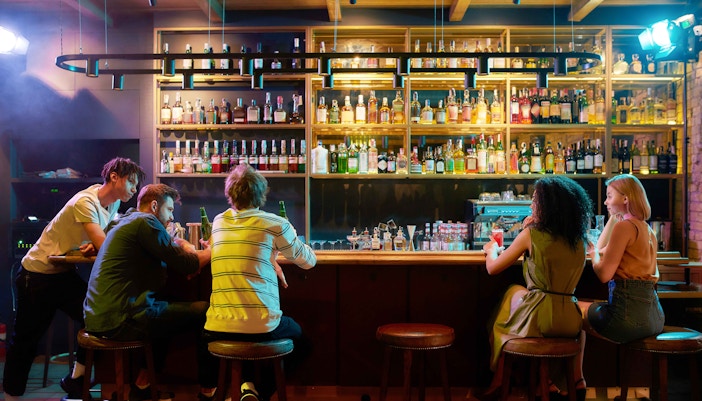
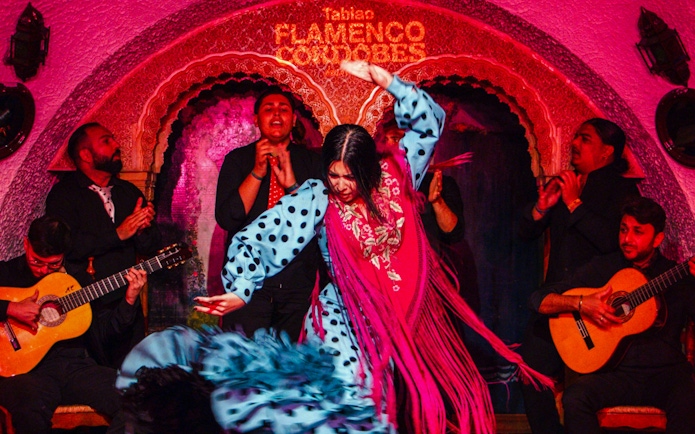
By day, the quarter is about churches, lanes, and stone facades. After dark, Plaça Reial, nearby La Rambla, and venues like Tablao Flamenco Cordobes and Palau Dalmases take over the plan.
Best ways to explore Gothic Quarter
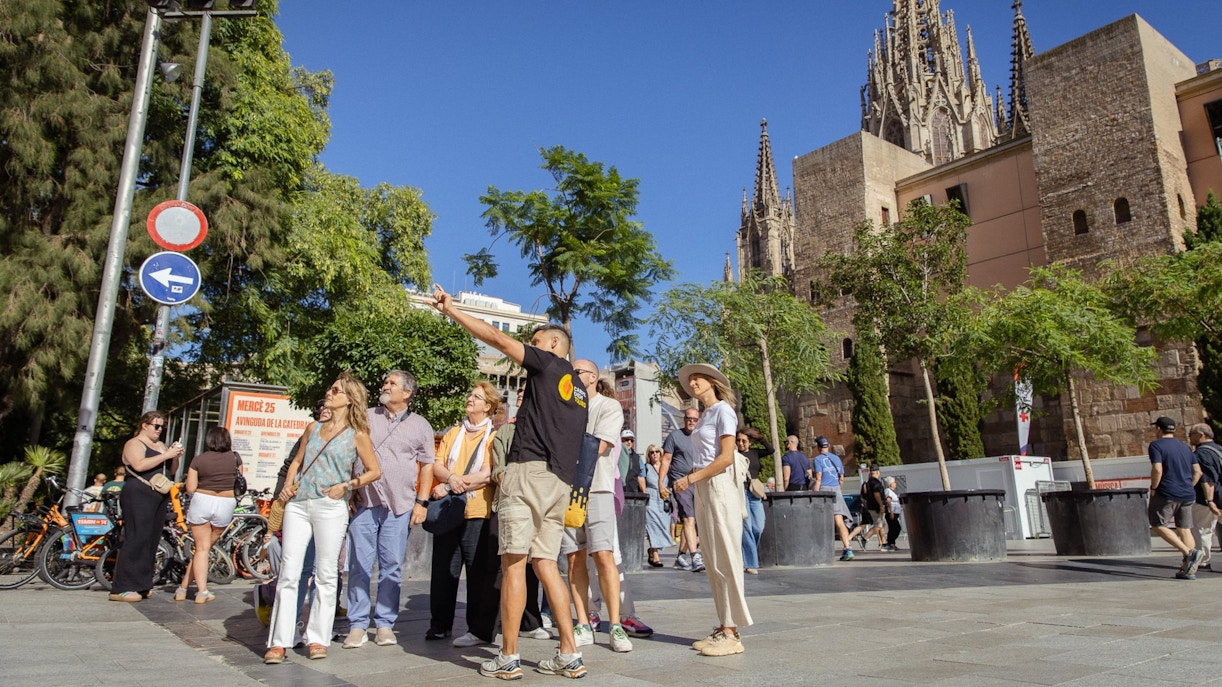
Walking tours work especially well here because the main route is compact: Plaça Nova, Barcelona Cathedral, Carrer del Bisbe, Plaça Sant Jaume, and Plaça del Rei all sit within a few minutes of each other. A guided route helps most at MUHBA and around the Roman remains, where what you’re seeing is easy to miss without context.
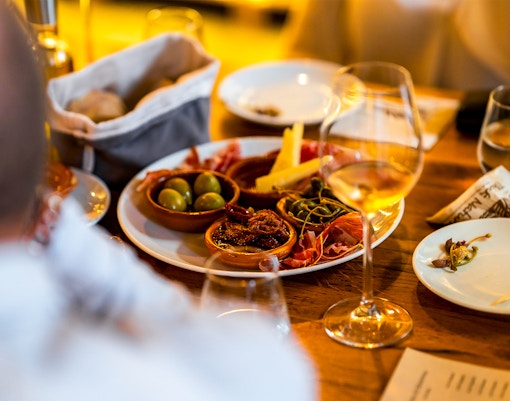
A food-focused walk around the quarter usually spills into nearby El Born or the La Rambla edge, because that’s where the stronger bar and market stops sit. Expect tapas, cava, Catalan classics, and old bars rather than a single market-centered route.
The cleanest pairings is the Gothic Quarter walk + Picasso Museum for a history-first morning followed by El Born’s art cluster. These work because the routes stay walkable and don’t waste time on transport.
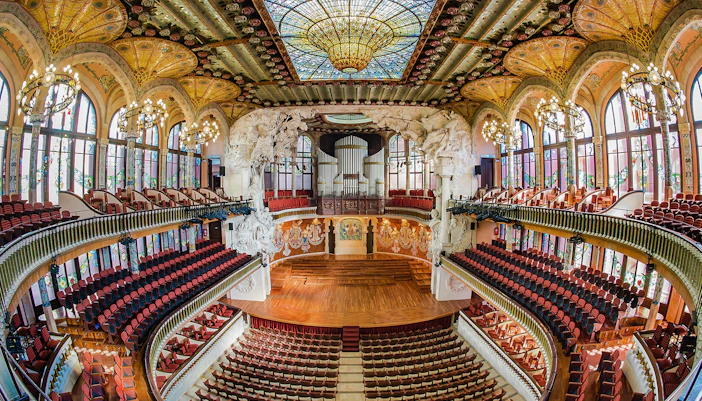
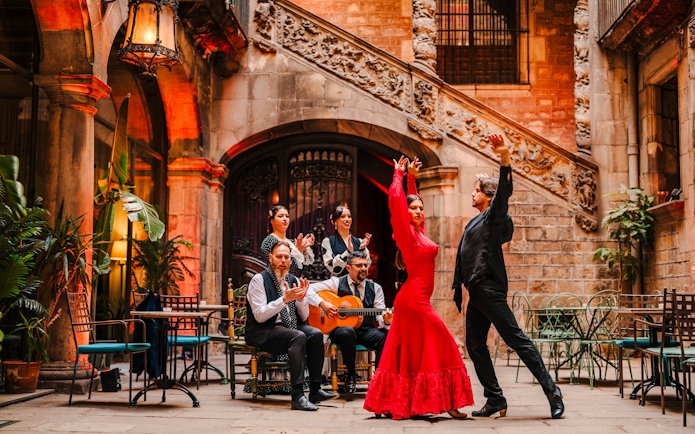
The quarter’s strongest evening add-on is flamenco, especially Tablao Flamenco Cordobes on La Rambla or Palau Dalmases - Flamenco Show in nearby El Born. If you want architecture rather than performance, Palau de la Música Catalana Entry Tickets make a strong east-side extension.
Pro tip
If you want the quarter explained rather than just photographed, start with Barcelona Cathedral Guided Tour with Skip-the-Line Entry, then follow it with Picasso Museum Barcelona Skip-the-Line Tickets with Free Gothic Quarter Tour.
Plan your visit
Pro tip
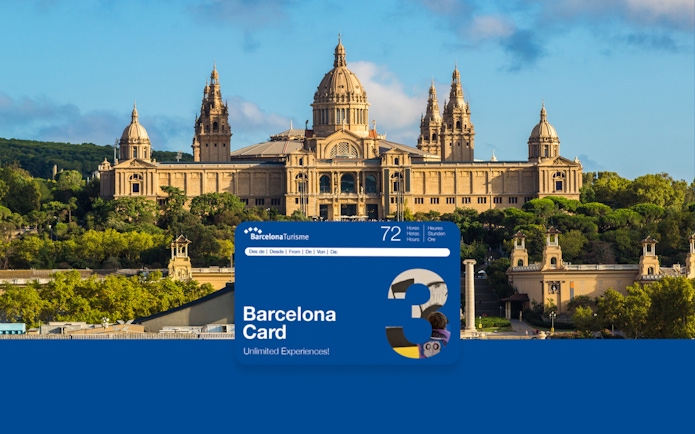
If you want one pass that actually fits this area, Barcelona Card: Access to 25+ Museums & Unlimited Public Transport is the cleanest match because it covers Picasso Museum, Moco Museum Barcelona, and your metro rides in and out.
Free things to do in Gothic Quarter
Suggested itinerary for visiting Gothic Quarter
The quarter is compact enough to do on foot, but it rewards slow walking more than checklist speed. The cleanest routes move west to east: Cathedral side first, then civic squares, then Plaça del Rei and El Born if you want to extend.
Tips for visiting Gothic Quarter
- Enter the quarter from Plaça Nova if you want the cleanest first impression; enter from Liceu only if your plan starts with Plaça Reial or the La Rambla side.
- If you’re visiting Barcelona Cathedral, go before 10am on a weekday. The square fills fast, and the line buildup makes the whole area slower to move through.
- For the best free photo of Pont del Bisbe, stand on the western end of Carrer del Bisbe and shoot east before the lane gets shoulder-to-shoulder.
- Don’t stop for your main meal on the first restaurant row off La Rambla. Walk deeper toward Plaça Sant Josep Oriol, Carrer d’Avinyó, or into El Born for stronger options.
- If your plan includes MUHBA, save it for midday. It’s the smartest indoor stop when the quarter is hottest and most crowded.
- The fastest way to tell you’ve drifted out of the quarter is the street pattern: once the lanes widen and the blocks regularize toward Eixample, you’ve left the medieval core.
- Keep your phone zipped away on Carrer del Bisbe, around Plaça Nova, and at the La Rambla end near Plaça Reial. Those are the spots where crowd density does the thief’s work.
- Look for the Roman wall remains at Plaça Nova before you head underground at MUHBA. Seeing the exterior fragments first makes the archaeological route much easier to follow.
Best photo spots in Gothic Quarter

Pont del Bisbe from the west side of Carrer del Bisbe in early morning
Stand near the Cathedral end of the street and face east so the bridge fills the upper frame. Shoot before 9am, when the lane is clear and the stone still catches soft side light.


Dining in Gothic Quarter
Must-eat tip
If you only do one food stop in the quarter, book Can Culleretes and order escudella i carn d’olla in winter or crema catalana if you’re there the rest of the year.
Should you stay in Gothic Quarter?
Short answer: Yes, if you want to wake up inside the old center and walk almost everywhere. It suits first-time visitors and short stays, but the trade-off is noise, older buildings, and higher room prices for the location.
- The vibe — Early mornings are quiet around Plaça Nova, Plaça del Rei, and the smaller church squares, but the mood changes sharply after dark near Plaça Reial, Carrer Escudellers, and the La Rambla edge.
- The logistics — Expect boutique hotels, restored apartments, and older buildings with more stairs and smaller lifts than you’d get in Eixample. Rooms are often pricier because you’re paying for the address more than the extra space.
- Who it’s for — It works well for first-timers, history-focused travelers, and anyone who wants to walk to El Born, La Rambla, and Plaça de Catalunya. It’s less suited to light sleepers, drivers, or families who want wide sidewalks and easier stroller movement.
- Top recommendation — Look around Plaça de la Catedral, Carrer del Duc, or the quieter lanes near Plaça Sant Just for boutique hotels or serviced apartments. They keep you central without the constant noise of Plaça Reial.
Explore other neighborhoods in Barcelona
Frequently asked questions about Gothic Quarter
No. La Rambla runs along the western edge of the Gothic Quarter, but it is a separate promenade rather than the neighborhood itself. Once you move east into lanes like Carrer del Bisbe, Carrer de la Palla, or Plaça del Rei, you’re in the Gothic core.
Yes, for specific indoor stops and evening plans. Barcelona Cathedral Guided Tour with Skip-the-Line Entry, Picasso Museum Barcelona Skip-the-Line Guided Tour, and flamenco shows like Tablao Flamenco Cordobes or Palau Dalmases - Flamenco Show are worth booking ahead, especially on weekends. The streets themselves, squares, and exterior landmarks need no booking.
It can be, especially near La Rambla, Plaça Reial, and the most obvious terrace rows. A quick coffee-and-pastry stop can still come in around €4–€8, while a proper sit-down Catalan meal is more often €18–€35. If you want better value, walk a few minutes toward El Born or Carrer d’Avinyó instead of sitting at the first place you see.
Yes, but it’s not the easiest part of Barcelona for it. The main challenge is cobblestones, narrow lanes, and crowd density around Barcelona Cathedral and Carrer del Bisbe. If you’re moving with a stroller, enter early and keep to broader connectors like Plaça Nova, Avinguda de la Catedral, and Via Laietana edges when possible.
The clearest Roman remains are outside at Plaça Nova and below ground at MUHBA in Plaça del Rei. The exterior wall fragments are quick and free, while MUHBA gives you the fuller archaeological route. If you only have time for one, pick MUHBA.
Yes, in museums, major attractions, hotel desks, and most restaurants around the central visitor zone. You’ll still hear more Catalan and Spanish in everyday service interactions than in some other tourist-heavy European centers. A simple bon dia or gràcies goes a long way.
They treat the quarter as a place to rush through between bigger landmarks. That usually means eating on the first terrace off La Rambla, missing Plaça del Rei, and never leaving the busiest corridor around the Cathedral. Slow down and give the smaller squares real time.
It depends on what you want. Daytime is better for the Cathedral, Roman remains, and lane-by-lane wandering, while night is better for Plaça Reial, bars, and flamenco nearby. If you can, do both — the quarter changes use more than it changes appearance.
Go to Mercat de Santa Caterina rather than defaulting to La Boqueria. It’s still central, easier to shop in, and more useful if you actually want produce, snacks, or a working local market feel. From the Cathedral side, it’s about 10 minutes on foot.
Yes, easily. El Born is the cleanest pairing and is only about 8–10 minutes on foot from Plaça del Rei. La Rambla is 5–7 minutes away, and Plaça de Catalunya is roughly 12 minutes from Plaça Nova, so you can combine the quarter with shopping, museums, or transport without much effort.